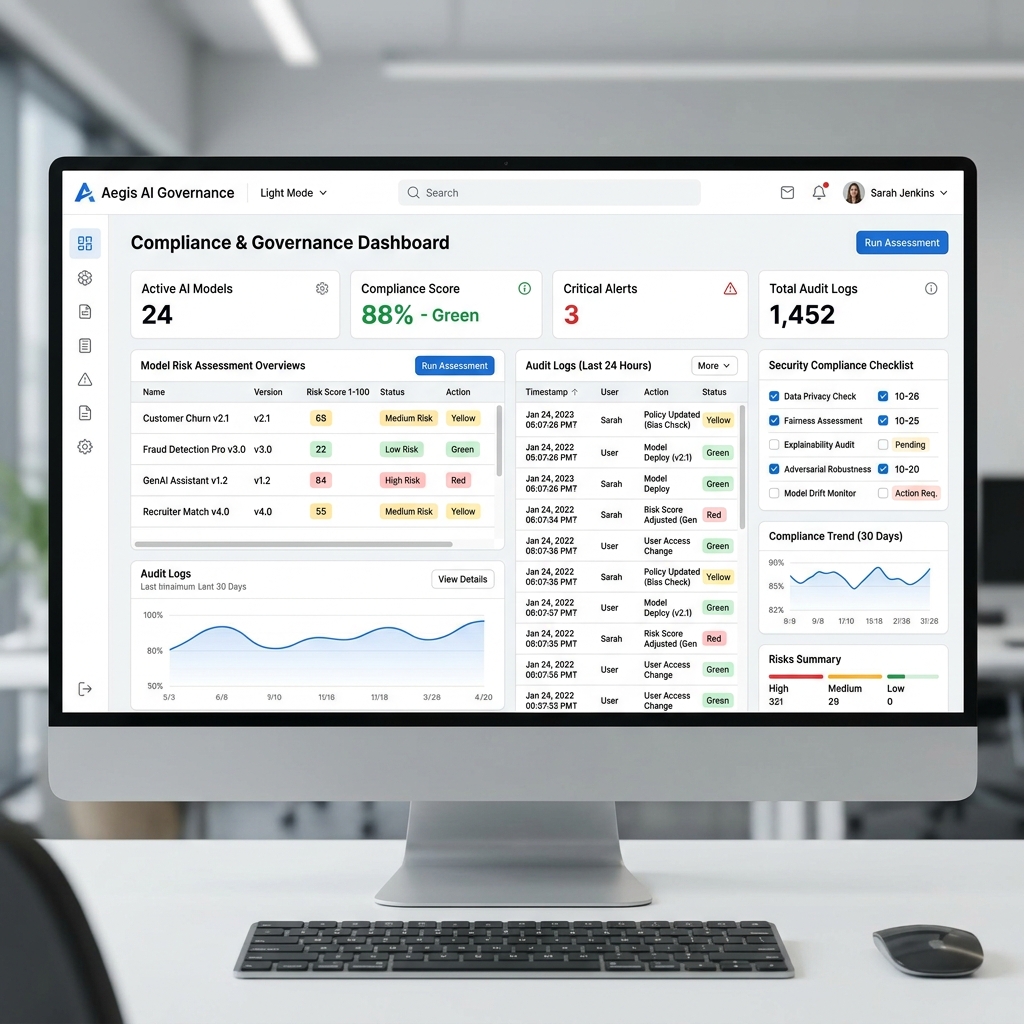
An $800M healthcare manufacturer used AI-driven 3-way matching and compliance controls to eliminate payment delays, vendor disputes, and audit risk across a complex multi-ERP environment.
This $800M healthcare manufacturer operates across two ERP systems — NetSuite for US operations and SAP ECC for their European manufacturing facilities. The company purchases from 1,200+ suppliers across medical device components, pharmaceutical-grade raw materials, and regulated packaging.
In healthcare manufacturing, the cost of a mismatch between purchase orders, goods receipts, and supplier invoices is not just financial — it creates regulatory audit exposure. An incorrect payment against an unverified PO can trigger FDA supplier qualification reviews or EU GMP audit flags.
By Q1 2024, the AP team was manually matching 3,200 invoices/month against POs and goods receipts across both ERP systems. Their 78% first-pass match rate meant 704 invoices every month required manual exception resolution. 43 of those escalated to formal vendor disputes. The average dispute took 11 days to resolve and carried a 15% probability of late payment.
The compliance team was more concerned than the finance team: "We had no immutable audit trail for our AP decisions. If an FDA inspector asked us to prove that payment X was made against a valid PO and a verified goods receipt, we were pulling data from three different systems and reconstructing the evidence by hand," the VP of Quality Assurance stated.
The first challenge was connecting NetSuite and SAP into a unified AP processing layer without disrupting either system. Flowtaris AI deployed integration connectors for both ERPs — NetSuite via SuiteQL API and SAP via RFC/BAPI. PO data, goods receipt records, and vendor master data were synchronized in real-time into the Flowtaris AP intelligence layer.
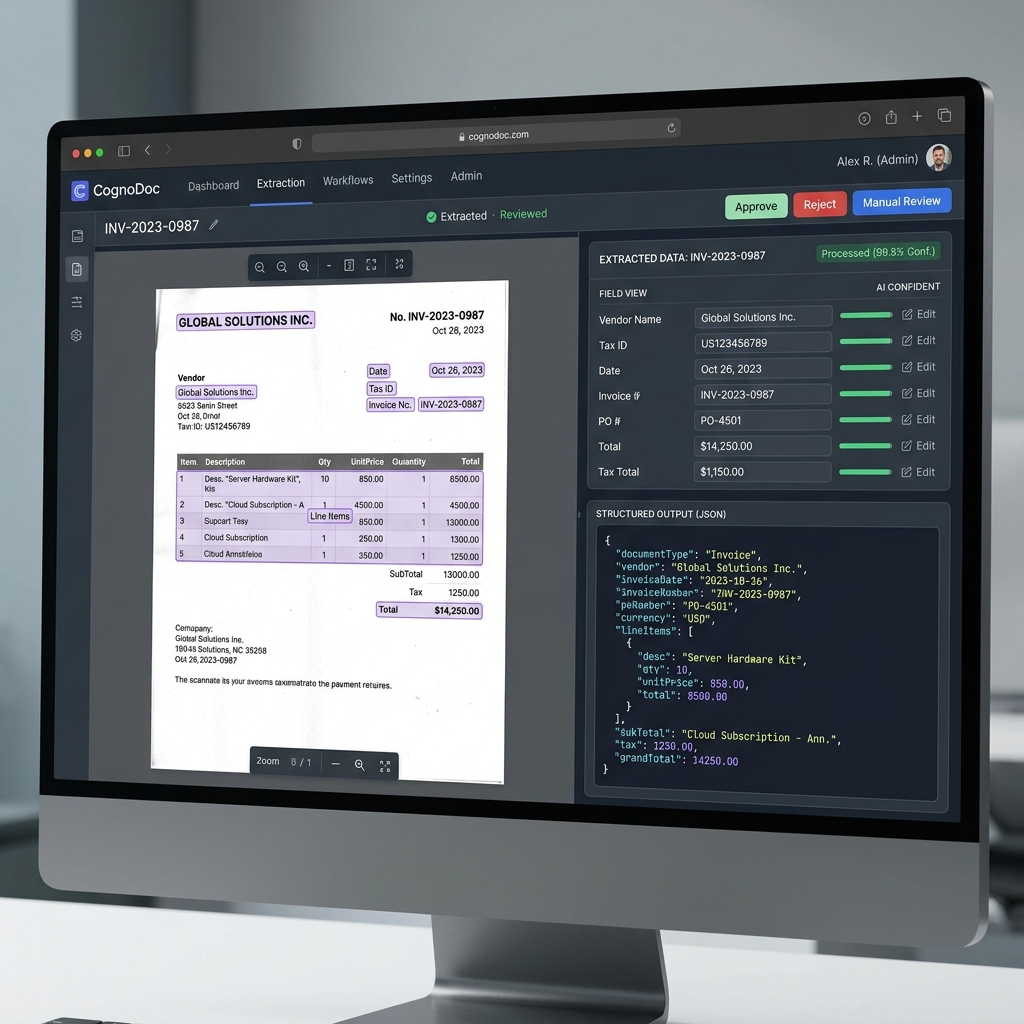
GenAI Document Intelligence deployed for invoice processing. The model was specifically fine-tuned on healthcare manufacturing invoice formats — medical device line items, lot numbers, NDC codes, and regulatory reference numbers. 3-way matching logic built with configurable tolerance rules by commodity category (tighter tolerances for regulated materials, standard tolerances for MRO supplies).
The compliance team's core requirement: every AP decision must have a complete, immutable, human-readable audit trail. Flowtaris AI built a decision log that records — for every invoice — exactly which PO line it matched against, which goods receipt confirmed delivery, which tolerance rule was applied, and what the confidence score was. This log was written to a tamper-evident audit database with timestamps and cryptographic hashing.
Full deployment across all 1,200+ suppliers. Vendor dispute management automated — when a mismatch is detected, the system automatically generates a structured dispute package (invoice, PO, GR, confidence scores) and sends it to the vendor for resolution, eliminating the back-and-forth email chains. SOC2 Type II audit completed concurrently with production deployment.
Real-time integration layer connecting NetSuite (SuiteQL) and SAP ECC (RFC/BAPI). PO data, GR records, and vendor master synchronized with < 5-minute latency. Automated conflict resolution for cross-system data discrepancies.
Every AP decision logged with full provenance — invoice fields, PO match reference, GR confirmation, tolerance rule applied, confidence score, and timestamp. Cryptographically hashed for tamper-evidence. Pre-certified for SOC2, FDA 21 CFR Part 11, and EU GMP audit requirements.
VLM model fine-tuned on pharmaceutical and medical device invoice formats. Recognizes lot numbers, NDC codes, GTIN, regulatory reference numbers. Field-level confidence scoring triggers compliance review for below-threshold extractions.
Mismatches trigger automated dispute package assembly — invoice copy, matching PO lines, GR confirmation, AI confidence breakdown — and vendor notification. 73% of disputes resolved by vendors without AP team involvement.
At the 6-month mark, outcomes were reviewed by the company's internal audit function and external SOC2 assessors. The 99.5% first-pass match rate represents a 27.6% absolute improvement from the 78% baseline — a statistically significant shift that the external auditor flagged as "industry-leading for healthcare manufacturing AP operations."
Most significantly, the company achieved its SOC2 Type II certification — a prerequisite for several major hospital system contracts that had been in negotiation for over a year. The commercial value of those contracts alone exceeded $15M in annual revenue.
"The SOC2 certification unlocked three hospital system contracts that we'd been unable to close for 18 months. But beyond the commercial impact — for the first time, I can confidently answer any FDA or regulatory audit question about our AP decisions. Every payment is fully documented, automatically. That's what I call actual compliance infrastructure."